
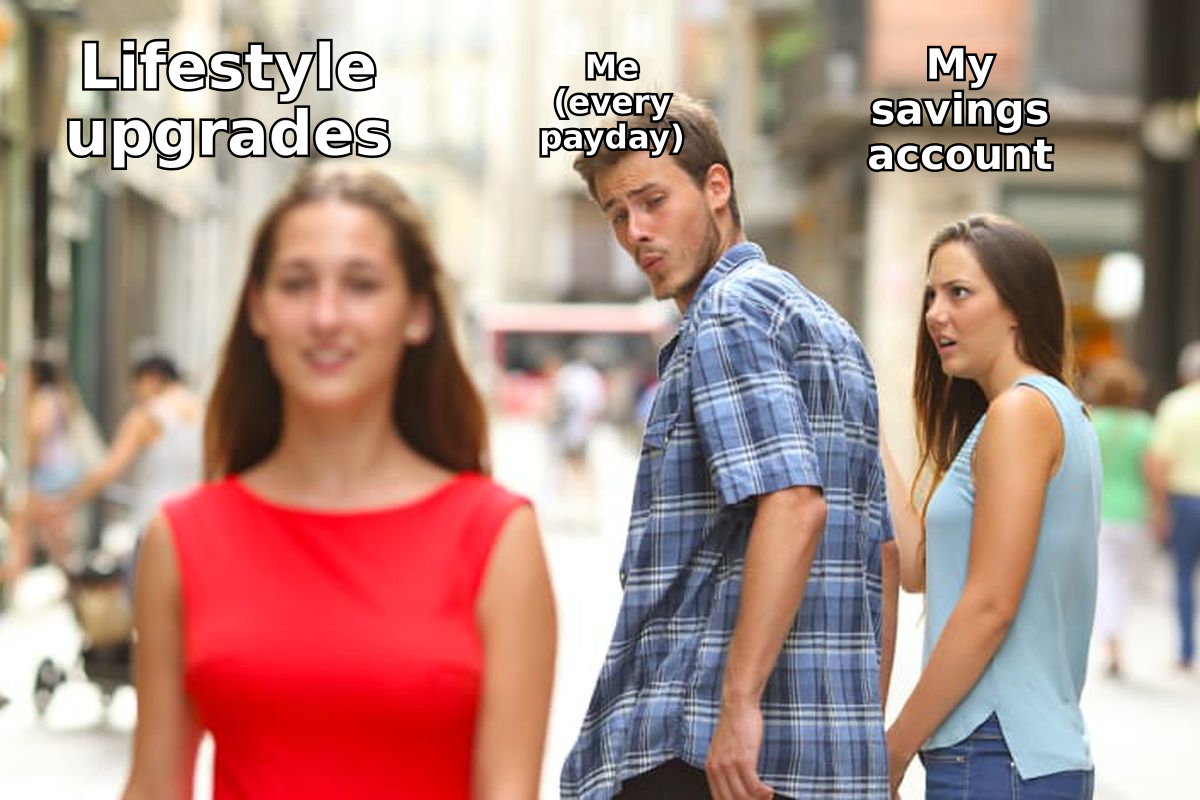
Let me be honest with you. A few years ago I landed a job that paid almost double what I was making before. I remember thinking — finally, this is it. I’m going to build savings, pay off debt, maybe even invest for the first time. I had plans. Real ones.
Six months later I was still broke. Not struggling-to-eat broke, but the quietly-anxious kind — checking my account before every purchase, living paycheck to paycheck, wondering where the money went.
The salary went up. The savings didn’t. What happened?
Lifestyle Inflation Is Sneaky
The problem has a name: lifestyle inflation. Also called lifestyle creep. It’s the pattern where your spending quietly rises to match — or slightly exceed — whatever you’re earning. More money comes in, more money goes out, and somehow the gap between the two never changes.
It doesn’t feel like a choice. That’s what makes it dangerous. Nobody sits down and thinks, “I’m going to start spending an extra $800 a month now.” It just… happens. The nicer gym. The upgraded apartment. The restaurants you wouldn’t have looked at before. The random Amazon orders that feel justified because hey, you’re earning more.
Your brain adjusts to new normals terrifyingly fast. What felt like a luxury three months ago feels like a baseline today. And once something becomes your baseline, cutting it feels like deprivation — even if you were perfectly fine without it a year ago.
The Numbers Tell the Story
Here’s what I did after my salary jumped. Instead of redirecting the extra money with intention, I just… let it absorb. New rent (nicer neighborhood). Better car payments. Upgraded subscriptions. Eating out more because I “deserved it” after long work weeks.
None of these things were bad in isolation. The problem was that I made all of them at once, without a plan, and told myself I could afford it because I was earning more. I could technically afford each item. I just couldn’t afford all of them together while also building wealth.
That’s the trap. You can afford the individual pieces and still be broke at the end of the month.
Earning More Won’t Fix It Alone
This is the part nobody wants to hear: if your spending habits don’t change, a higher salary just funds a more expensive version of your current life. That’s it. You’re not building anything. You’re just playing a bigger game with the same losing strategy.
I’ve watched people go from $45,000 to $80,000 a year and still have nothing to show for it five years later. The income changed. The mindset didn’t. The spending followed the income upward the entire time.
It’s not a money problem. It’s a pattern problem.
What Actually Helps
I’m not here to tell you to stop having fun or eat rice every day. But these things changed how I think about money:
- When income goes up, automate savings first. Before lifestyle adjusts, move the difference — or at least a chunk of it — somewhere you won’t see it. If you never see it, you can’t spend it.
- Audit every recurring charge once a quarter. You’ll find things you forgot you were paying for. Subscriptions pile up invisibly.
- Be intentional about upgrades. Not every upgrade is wrong. But make it a deliberate choice, not a passive drift. Ask: “Am I choosing this, or am I just adjusting to it?”
- Track spending for one month. Just one. Not forever. Just long enough to see the real picture. Most people are shocked.
The Real Goal
The goal isn’t to earn a bigger salary. Plenty of high earners are quietly drowning. The goal is to build a bigger gap — the space between what you earn and what you spend. That gap is where freedom lives. That gap is what turns into savings, investments, options.
A $50,000 salary with a $10,000 gap is better than a $90,000 salary with no gap. Every time.
You didn’t get the job to keep being broke. You got the job to have choices. Start spending in a way that gives you those choices.
If this hit close to home, feel free to contact me — I write about money, growth, and the stuff nobody talks about honestly enough.