
Stop Waiting Until You Feel Ready

I spent almost two years “getting ready” to start something I cared about. I had a list of things I needed to do first — courses to finish, money to save, skills to sharpen, confidence to build. It was a very organized list. A very convincing one. I could defend every item on it.

Then someone else launched almost exactly what I had been planning. Same niche, same angle, same format. They just… started. Before they were ready. Before everything was figured out. And they figured it out on the way.

That’s when I understood how expensive waiting is.

Readiness Is a Feeling That Never Comes

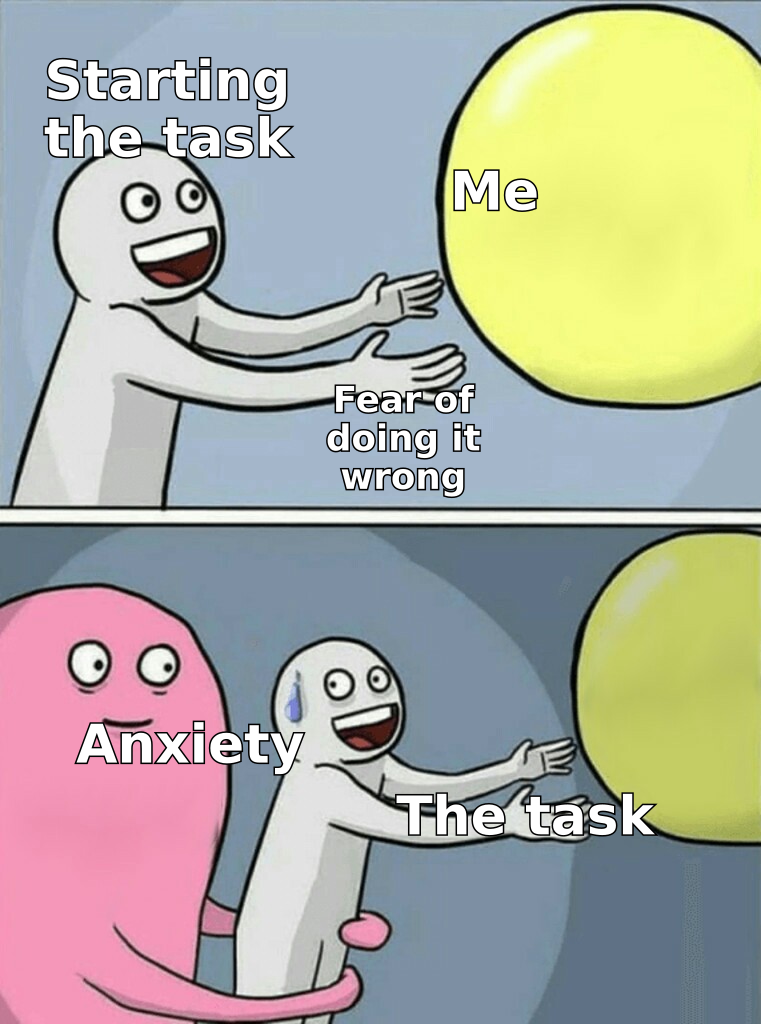
“I’ll start when I feel ready” is one of the most damaging sentences in the self-improvement vocabulary. It sounds responsible. Thoughtful, even. But what it really means is: I’m going to wait indefinitely for a feeling that won’t arrive on its own.

Nobody feels ready for the big things. Nobody felt ready to start their business, change careers, leave a bad relationship, move to a new city, have a difficult conversation, or bet on themselves. The people who did those things didn’t feel ready. They just stopped treating the feeling as a prerequisite.

Think about the last time you did something genuinely new and hard. Did you feel ready going in? Probably not. Did you figure it out anyway? Probably yes.

Waiting Is Procrastination With a Better Excuse

Here’s what I’ve come to believe: waiting for readiness is procrastination that’s learned to wear a professional outfit. It has a briefcase and a calendar and a list of reasonable-sounding requirements. But underneath, it’s fear. Fear of starting and failing. Fear of starting and discovering you’re not as good as you imagined. Fear of being judged before you’ve had time to get good.

The “getting ready” phase can last forever if you let it because there’s always one more thing you could learn, one more resource you could read, one more reason to wait for better timing. There is no better timing. There’s now and there’s the version of you that never started.

Proverbs 13:4 says the soul of the sluggard craves and gets nothing, while the soul of the diligent is richly supplied. That stuck with me — not because it’s harsh, but because it’s accurate. Craving without acting is its own kind of failure.

What Starting Actually Does

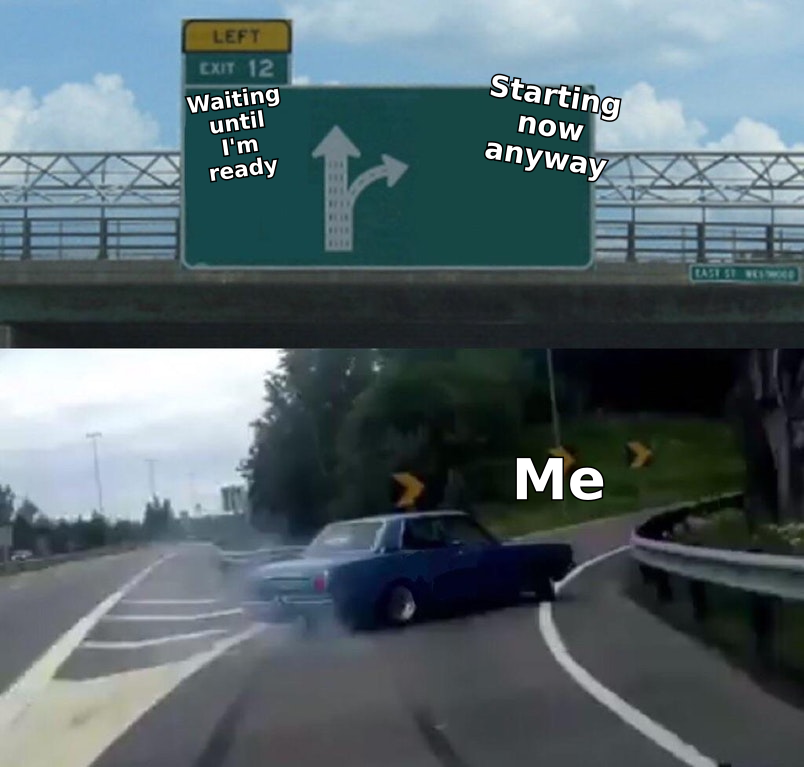
Readiness isn’t a feeling you wait for. It’s a result of starting. You get ready by doing the thing badly at first, then less badly, then eventually well. That’s the actual sequence — not learn everything, feel ready, then start. You learn by starting. There’s no shortcut and there’s no version where you skip the awkward early phase.

The business you keep “almost” launching? You’d have had two years of data by now. The skill you keep meaning to develop? You’d be good at it already. The conversation you keep putting off? It’s sitting there costing you energy every single day.

A Few Things That Actually Helped Me

  • Set a “bad launch” date. Give yourself permission to start imperfectly on a specific date. Not perfectly — just started. The bad version is infinitely more valuable than the perfect version that doesn’t exist.
  • Separate preparation from procrastination. Ask yourself honestly: “Am I learning something that moves me forward, or am I staying in research mode because it feels safer than doing?” If it’s the latter, close the tab and start.
  • Make the first step embarrassingly small. Not “launch the business” — “send one email.” Not “change careers” — “update one section of my resume.” Small starts break the stuck feeling.
  • Find someone who started messy and succeeded anyway. There are millions of them. Study their actual timeline, not the highlight reel.

The Version of You That’s Ready

Here’s the honest truth: the version of you that feels confident, prepared, and ready is built by the version of you that started scared. There’s no path to ready that doesn’t go through doing. You’re not waiting for a better version of yourself to show up — you’re avoiding the process that builds them.

Start the thing. Start it badly. Start it scared. Start it before you’re ready. That’s the only way readiness ever actually arrives.

Whatever it is you’ve been postponing — the gap between where you are and where you want to be is exactly the length of time you keep waiting. Close the gap. Start today.

If you’re stuck on where to begin with something, feel free to reach out — I write about this stuff because I’ve lived most of it the hard way.

Why You’re Still Broke Even Though You Have a Good Job

Let me be honest with you. A few years ago I landed a job that paid almost double what I was making before. I remember thinking — finally, this is it. I’m going to build savings, pay off debt, maybe even invest for the first time. I had plans. Real ones.

Six months later I was still broke. Not struggling-to-eat broke, but the quietly-anxious kind — checking my account before every purchase, living paycheck to paycheck, wondering where the money went.

The salary went up. The savings didn’t. What happened?

Lifestyle Inflation Is Sneaky

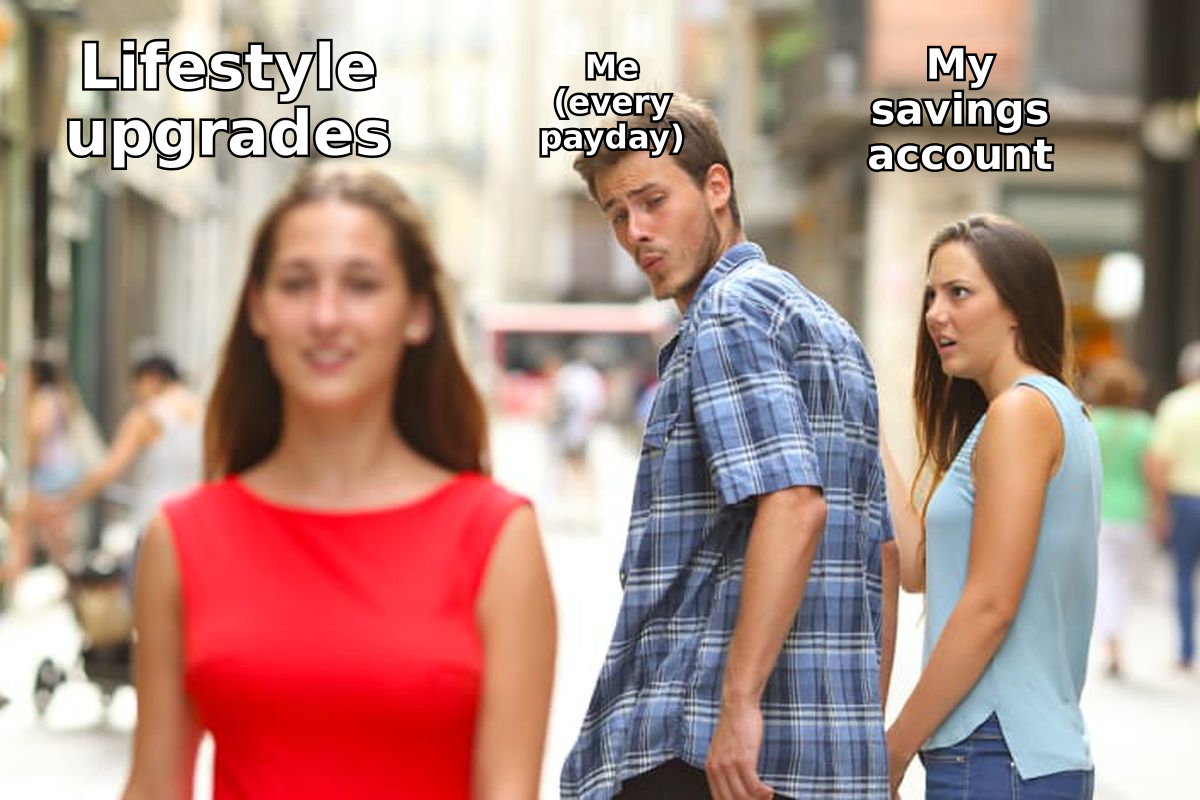
The problem has a name: lifestyle inflation. Also called lifestyle creep. It’s the pattern where your spending quietly rises to match — or slightly exceed — whatever you’re earning. More money comes in, more money goes out, and somehow the gap between the two never changes.

It doesn’t feel like a choice. That’s what makes it dangerous. Nobody sits down and thinks, “I’m going to start spending an extra $800 a month now.” It just… happens. The nicer gym. The upgraded apartment. The restaurants you wouldn’t have looked at before. The random Amazon orders that feel justified because hey, you’re earning more.

Your brain adjusts to new normals terrifyingly fast. What felt like a luxury three months ago feels like a baseline today. And once something becomes your baseline, cutting it feels like deprivation — even if you were perfectly fine without it a year ago.

The Numbers Tell the Story

Here’s what I did after my salary jumped. Instead of redirecting the extra money with intention, I just… let it absorb. New rent (nicer neighborhood). Better car payments. Upgraded subscriptions. Eating out more because I “deserved it” after long work weeks.

None of these things were bad in isolation. The problem was that I made all of them at once, without a plan, and told myself I could afford it because I was earning more. I could technically afford each item. I just couldn’t afford all of them together while also building wealth.

That’s the trap. You can afford the individual pieces and still be broke at the end of the month.

Earning More Won’t Fix It Alone

This is the part nobody wants to hear: if your spending habits don’t change, a higher salary just funds a more expensive version of your current life. That’s it. You’re not building anything. You’re just playing a bigger game with the same losing strategy.

I’ve watched people go from $45,000 to $80,000 a year and still have nothing to show for it five years later. The income changed. The mindset didn’t. The spending followed the income upward the entire time.

It’s not a money problem. It’s a pattern problem.

What Actually Helps

I’m not here to tell you to stop having fun or eat rice every day. But these things changed how I think about money:

  1. When income goes up, automate savings first. Before lifestyle adjusts, move the difference — or at least a chunk of it — somewhere you won’t see it. If you never see it, you can’t spend it.
  2. Audit every recurring charge once a quarter. You’ll find things you forgot you were paying for. Subscriptions pile up invisibly.
  3. Be intentional about upgrades. Not every upgrade is wrong. But make it a deliberate choice, not a passive drift. Ask: “Am I choosing this, or am I just adjusting to it?”
  4. Track spending for one month. Just one. Not forever. Just long enough to see the real picture. Most people are shocked.

The Real Goal

The goal isn’t to earn a bigger salary. Plenty of high earners are quietly drowning. The goal is to build a bigger gap — the space between what you earn and what you spend. That gap is where freedom lives. That gap is what turns into savings, investments, options.

A $50,000 salary with a $10,000 gap is better than a $90,000 salary with no gap. Every time.

You didn’t get the job to keep being broke. You got the job to have choices. Start spending in a way that gives you those choices.

If this hit close to home, feel free to contact me — I write about money, growth, and the stuff nobody talks about honestly enough.

Why Saving Money is So Damn Hard

How much percentage do you save with your monthly income? 50% 70% 30%.

Most people save at least 20%, that is a good percentage for savings. While you spend 80% for things such as food, rent, mortgages(if you have mortgages, your savings can be lesser as mortgages tend to be higher cost) etc.

But sometimes you overspend. You overspend of food, on a date, on items and on many things.

For now I’m sure you know the difference between wants and needs. It’s basic. Basically, wants are things that you don’t need. You can survive without the “wants”. While needs are important. You need the need things in order to survive in your life and help you in your daily living, education and career. A high end expensive PC is not a want for video editors or game developers, it is a need. They need it for their career. While buying an expensive PC for gaming is first a need, and then a want. I don’t bash people for playing games, yes you need a high end PC for heavy gaming, but do you need to play games in life or is it just a want?

Overspending is the enemy of saving. We need to find the root cause of overspending, here it is, it’s very simple.

  1. You think you have enough money in your bank atm card.
    This is the most important thing to think about. When you have money in your atm card or wallet, you don’t worry about anything. You become careless. You purchase “WANTS” and not “NEEDS” You can buy an expensive dinner, or buy an item that amazes you without any worry in the world.You think “as long as I can retain that amount of money in my bank I can do what I want”.This is a problem. Many people are like this. Smart people do not leave money in their banks, they invest it. For them, it is better to use the money to buy an item that is a need rather than a money stuck in the bank.

    Money is meant to be circulated, not to be saved. This statement kind-of goes against the title of this article. But let me explain further.

  2. You don’t plan.
    This is is connected to #1.Simple. if you have plans in the future, then you’re a smart person. You save money for your plans. Whether this plans are buying need items or travelling, it’s good to have plans.Having money stuck in your bank plus you don’t have plans, equals disaster. When you plan, you plan it seriously. Whether you’re out for a walk, or a dinner date, your plans are stuck in your head. You are mindful of your expenses because all your money are saved for your plans. You wanna buy a car? buy a new laptop? It’s better to have a plan, this helps you save money for your goals.

    So next time you spend money for that expensive dinner? Stop. Stop being a mindless fool. Save money and spend it on your goals.

Real life experience.

One time I had 100,000 in my bank. Apparently, it retained for more than a year. It never went up. Sometimes I buy an item worth 10k, with 90k remaining. The next payday, its’ back to 100,000-ish. That’s one of my stupidest, lowliest, dumbest era of my life. I never saved money, I never had plans, I never spent that 100,000 for something good. I just went foolishly spending on things I want and never increased it. When you have money in the bank, and a relative or a close family member asks for money, you tend to give more. And families don’t repay. You could give away money because you think “because I have money” when in fact you’re slowly making yourself poor.

Then one day, I decided to buy a 100,000 worth PC. It is for my game development career. Then I realized suddenly it changed me. I suddenly became aware of my spending. All the useless expenses in my mind I suddenly regret or suddenly I didn’t want them anymore.

I became mindful suddenly. Before planning, I was thinking inviting my partner to a dinner, go out, grab some starbucks coffee, spend a minimum 1,000 in one day just for dinner. But after planning, I suddenly didn’t want to do that. See my point?

TIP

So for my tip, when you go out alone or on a date, remember your goals and plans, and make them a priority. think about it before going into a restaurants. This is also helpful when you’re stopped outside and is trapped by sales people, making you buy stuff you don’t really need. Better, when you’re trapped by scammers, and is trying to force you to purchase their stuff, just remember that you have a plan, a goal a priority, this will help you turn them down, say no. You will become a strong tower that cannot be torn down. When you’re outside, remember how much money you have in your bank, it can be a third, or half of the price of the thing you need to buy. Every cent counts.

The Information Age, why you should realize that everybody struggles, just like you

In this day and age, we are in the information age, you can access information so easily, you can become a “somewhat expert” in something or just about anything. That is a good thing, a very good thing. The information age has many benefits, but it also has many downsides. The most basic disadvantage is privacy. Your info can be accessed all around the web, it can be used to take advantage of you, your privacy, and all. But what I realized is something more subjective, something that I know is affecting most people.

In the information age, knowledge and information are everywhere, our brains should also try to gather all this information to survive in society.

In innovating careers and fields, information and knowledge are being shared around the world every day, creating more innovative data, creating more new studies, creating new information, creating new things to learn. To survive, we need to keep adapting to these ever-accelerating fast changes.

In the web development career, let’s say you just finished learning Laravel framework, or React JS framework, then suddenly a new JS Library pops out, Three JS. Now you will need to learn concepts of 3D objects, faces, vertices, and the never-ending bucket of information.

You become frustrated. 

You see a lot of people seem to adapt quickly, you feel like a loser.

NO!

Everyone struggles just like you, even the smartest ones feel the same way as you. In the information age, a lot of people struggle with studying, memorizing, remembering information. To survive at this age, all you need is perseverance. This may sound corny, you may have heard this a lot in self-improvement seminars. Well, it’s the truth. That’s why the numbers of successful people are lower than the least successful people. The rich are fewer, while the poor are in the billions in number. The rich perseveres, the poor want an easy life.

Use technology against technology.

With the wave of information, use your computer for the overwhelming data. You don’t need to memorize everything, save it on your computer. What is important is the theory, the concept of the data, the information you are learning.

This was my mistake, applying to an IT company, I always think “I need to know this and that.”. You will only burn yourself out. Try to learn the basic concept, the general structure, the whole picture. Just save and ready the smaller and countless info in your computer, your phone, your flash drives. LOL

Investing in One’s Self?

Wealth is such a good thing, it’s not just about money and assets, it’s also about your well being as a whole. Your mind, your soul, your health, and your life is in the scope of wealth.

When we hear the word “invest”, “investing”, “investment”, what usually comes to mind is about money, business and assets. That is true, but investment is also about providing and endowing something on someone or something or on yourself.

When we study in our schools we are investing knowledge in our selves. At the same time, we are teaching ourselves the value and virtue of responsibility as students. I believe what we put into something, it multiplies. Well there are things that when we put, it doesn’t multiply or increase.

There’s a story in the Bible about the Parable of the Talents in Matthew 25, the master gave talents to his servants. Two servants worked on the talents they were given and it doubled. One servant dug a hole in the ground and buried the talent so it wont get lost. When the master returned, he was pleased with the two servants and rewarded them while he was angry with the one servant who buried the talent in the ground, he was punished and all his talent was taken way from him.

It’s a story full of truth and wisdom. We can learn a lot from that parable.

In life we all live in different environments and arrangements, some of us live in first world countries, some in third world, some were born rich, and some poor, some were given education while some had no chance to go to school. Our scenarios in life are all different. But we can all be wealthy and prosperous, all we need to do is “invest”.

Invest your time for self improvement, invest your self in becoming a better person than yesterday. Wherever we are, whatever our situation is, these are all opportunities, these are all given, we need to use it.

Awhile ago I was playing games, just sitting lazy with my subconscious mind then the conscious mind snapped me back. What the hell am I doing? I decided to stand up, do house chores, started my laundry while thinking what new technology should I learn and master?

Also I was vaping, I thought, if I invest in myself, I should also invest in my health, I decided to throw my vapes into the trash. No more smoking for me.

Even your posture, if you don’t fix your posture you’re limiting yourself for a better future. A good posture can make you taller, more beautiful/handsome. You will look more healthy, people will admire you, people will respect you, you become more agreeable, it’s beneficial for making deals with clients and businesses, and your future body health will thank you for it.

Look at the things that multiply, and invest on it.

Get Rid Of Your Lazy Personality

Get rid of your lazy personality, but how? Why are you still poor? That should be the most often asked question to ourselves. Why is it a question? Because it’s hard to know the answer. Or maybe the answer was there all along, we’re just too dumb to realize or too busy doing other things which aren’t supposed to be in our priority. Being poor is not just about not having enough money. Being poor is about your personality, yourself, lacking the discipline on basically just everything or most of the things in life.  Be aware of these per

We all get there sometimes, stuck, confused and lost off your purpose, not for all maybe but I think most people. I have always been a very busy person, when I say busy, busy on progressing myself, my work and my projects. I knew what I wanted, and I knew how to get it. Those were the days where my momentum is unstoppable. I even pushed on starting my own company because there’s a boost of client sales and projects.

It felt good, I felt confident and satisfied. Everything’s going well, there are ups and downs in my career and I don’t know what happened since then, everything changed. I lost my momentum, I lost my clients, my projects, my money-making routine.  I’ve become lazy, my mind became lazy, my focus went down, my eagerness to learn vanished. I started taking clients for granted, I lost everything.

Being satisfied while being a fool is a bad combination. I admit, I felt satisfied, I took things for granted, I felt confident, I said to myself, this is life, and I should remain like this in order to enjoy life. What a bad idea.

I never realized that I was still young, 23 at that time and I have so much to learn. Being arrogant and having false confidence, I stopped listening to other people, I only listened to myself, and so here right now, I’m 26, 3 years of being dumb and stupid without realizing it.

I would like to list what I learned from my mistakes.

The qualities of a lazy person and know how to get rid of your lazy personality.

1. Easily Loses Motivation
2. He Knows/Wishes What He Wants But Doesn’t Fully Focus On Getting It
3. Out of Focus
4. Takes Time For Granted
5. Procrastinating
6. Sleeps a lot and do useless things

You should first know this 6 symptoms to get rid of your lazy personality.

If you find yourself to have these characteristics then you’re in trouble, you may not realize it now but soon you will see how it materializes and affects your future. I realized that as we are still younger, you must develop good characteristics. If you’re a student and is always late, you will carry that bad late-habit when you start working.

We always hear the saying and similar quotes that lazy people will always become poor, it’s Biblical, it’s practical, it’s a reality. Get rid of your lazy personality now, so you can start growing.

If you want to know more about self improvement, feel free to contact me and we can share our thoughts with each other.