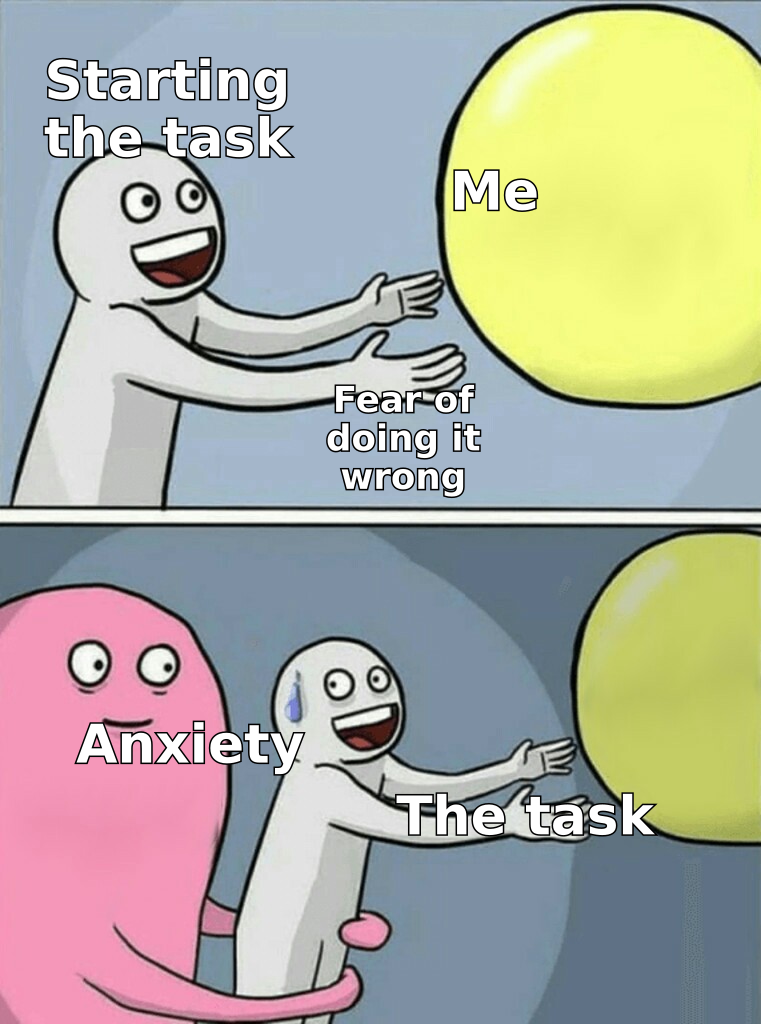

I spent three hours writing a post last month. I rewrote the opening four times. I deleted an entire section because it felt too whiny. I added a personal story I wasn’t sure I wanted to share. I changed the title eleven times.
The post went up. Got a decent amount of impressions. Someone commented: “Great post! I asked AI to summarize this and shared it with my team.”
I stared at that comment for a long time.
Here’s What’s Actually Happening
AI is writing a massive percentage of content on the internet right now. Blog posts, newsletters, LinkedIn articles, SEO pages — a huge chunk of what you’re seeing was generated in seconds by a model trained on everything humans wrote before.
At the same time, people are using AI to read the internet. Perplexity. ChatGPT. Google’s AI summaries. NotebookLM. You ask a question, an AI reads ten articles, and gives you three bullet points. You close the tab. Done.
So we have: AI writing → AI reading → human gets a summary.
Which means, increasingly, the content pipeline looks like this:
- A machine writes 1,500 words
- Another machine reads those 1,500 words
- A human reads 4 sentences
- Everyone calls it “staying informed”
And I keep thinking: what is even the point?
I Don’t Think It’s Nothing. But I Think We Need to Be Honest.
Let me be real with you. I write on this site because I have things I want to say. Real things, from real experiences, about stuff I’ve actually felt or figured out. That matters to me.
But there’s a difference between me writing and a content farm pumping out 300 articles a day using GPT-4 and a WordPress plugin. And here’s what bothers me: to the AI summarizer, there’s no difference. It compresses both the same way. The algorithm doesn’t know I rewrote my opening four times. It doesn’t know I deleted the whiny part. It doesn’t know I hesitated before sharing that story.
All it knows is: this article is about X. Here are the main points. Done.
The compression removes the human. And when you add AI-generated source material into the mix, you’re now reading a machine’s summary of a machine’s interpretation of something nobody actually lived through.
That’s not information. That’s a very efficient echo chamber.
Why People Still Write (And Why It Still Matters)
Here’s what I’ve landed on: writing is not just about transferring information. If it were, you wouldn’t need stories. You wouldn’t need examples. You wouldn’t need voice or tone or the specific way someone phrases a hard truth.
You write because writing is how you figure out what you actually think. You write to be witnessed — to say “this is what it felt like,” and have someone else say “yes, me too.” You write to change someone’s mind slowly, through the weight of how you build an argument, not just the conclusion.
AI can do the conclusion. It can’t do the weight.
A summary can tell you someone argued that financial anxiety limits your career risk-taking. But reading the actual piece — the one where the writer describes sitting in a parking lot before a difficult conversation about their salary, heart rate up, rehearsing what they were about to say — that does something different to you. That reaches somewhere the bullet points can’t.
The question is whether people still want that. Or whether we’ve collectively decided that being efficient is more important than being moved.
The Part That Actually Worries Me
It’s not that AI writes content. Fine. Tools exist. People use them.
What worries me is the feedback loop. AI writes average content → AI reads and summarizes average content → humans train themselves to expect average content → AI learns from human behavior that average content is what’s wanted → more average content is made.
Somewhere in that loop, the extraordinary stuff gets starved out. Not because it isn’t better, but because it doesn’t fit the pipeline. It’s too specific. Too personal. Too weird. Too human.
The things that genuinely change how you see yourself or the world tend to be a little uncomfortable to read. They take something from you. They require you to sit with something instead of clicking away. They don’t compress cleanly into bullet points because the point isn’t in the conclusion — it’s in the journey to get there.
That kind of writing will always exist. But it might become harder to find in a sea of perfectly competent AI-generated content that technically answers the question and leaves you completely unchanged.
What I Think You Should Actually Do
I’m not going to tell you to boycott AI tools. That’s not realistic, and honestly it misses the point.
But I will say this: the next time you’re about to ask AI to summarize an article, ask yourself what you’re really after. If you need a fact, a date, a quick overview — fine, summarize away. But if you’re reading something because you want to understand something better, because you want a different perspective, because someone wrote something that might actually shift how you think about your life — read it yourself. The whole thing. Slowly.
Not every piece of writing deserves that. A lot doesn’t. But some does, and the only way to find out which is which is to be present for it.
And if you write: keep writing like it’s going to be read by a human who has thirty unread tabs open and still chose yours. Write something that earns the stay. That’s the only answer to the AI loop that actually works.
The person who commented on my post — the one who asked AI to summarize it and forwarded the summary — probably shared something useful with their team. The information moved. The insight propagated.
But they’ll never know about the parking lot. They’ll never know I almost didn’t write it. They’ll never feel the specific weight of the sentence I spent forty minutes on.
And that’s fine. Not everything needs to be felt.
I just think some things do. And I hope we don’t optimize that away.