
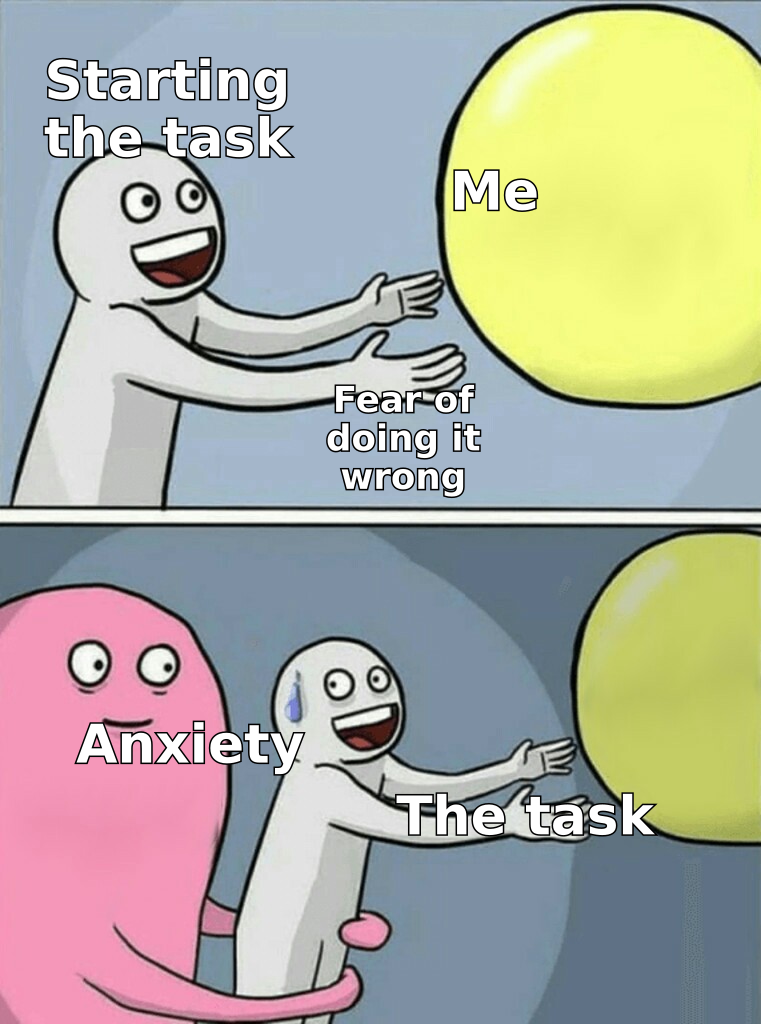
I used to think I was just a lazy person. That had to be it, right? Smart enough to know what I needed to do, disciplined enough to keep a tidy calendar, fully capable of doing the work — and yet there I was, not doing it. Watching the deadline approach like a train I could see but couldn’t move away from.
It wasn’t until I started actually examining what happened in the hours before I’d avoid a task that I noticed something: it wasn’t boredom. It wasn’t tiredness. It was a specific, low-grade dread. A feeling I eventually recognized as fear.
Not fear of the task itself. Fear of what doing the task might reveal.
Procrastination Is Self-Protection That Backfires
Here’s the thing about procrastination that nobody says clearly enough: it’s not a discipline problem. It’s usually a fear problem dressed up as a discipline problem. And the reason it’s so hard to address is that if you misdiagnose it, you apply the wrong fix. More pressure, more guilt, more “just do it” energy — none of which touches the actual issue.
The fear underneath procrastination usually comes in a few flavors:
- Fear of failure. If you don’t try properly, you can’t properly fail. The incomplete attempt always comes with a built-in excuse — you didn’t really give it your best, so the result doesn’t really count.
- Fear of judgment. Starting means producing something. Producing something means other people can see it and evaluate it. Not starting keeps you safe from that.
- Fear of discovering your limits. This one is subtle and brutal: some people avoid starting because starting might reveal that they’re not as capable as they hope. Staying in “I could do this if I started” is safer than finding out what actually happens when you try.
I lived in that last one for a long time. There was a project I genuinely cared about that I put off for almost eight months. Not because I didn’t have time. Because I was terrified that if I gave it everything and it wasn’t good enough, I’d have to update my whole story about myself. As long as I hadn’t tried, the possibility remained. Delay was protecting the dream.
Why Waiting Makes It Worse
Here’s the cruel mechanic of it: the longer you wait, the more the fear grows. Because now you’ve built it up. Now it’s not just the original task — it’s the task plus the weight of all the time you’ve already avoided it, plus the guilt, plus the self-judgment. The mountain gets taller the longer you stand at the bottom.
And the brain registers the relief you feel when you put something off as a reward. That’s the trap. Avoidance feels good in the short term. So your brain learns to chase that relief, which means more avoidance, which means more guilt, which means more dread, which means more avoidance. The cycle is self-reinforcing.
You’re not getting lazier. You’re getting more afraid.
Breaking the Pattern (For Real)
The good news — genuinely good news — is that fear is a more solvable problem than laziness. You can work with fear. You can reason with it, expose it, shrink it down to size. Laziness is a character trait. Fear is a response to something specific, and specific things can be addressed.
What actually helped me:
- Name the fear explicitly. Not “I don’t feel like doing it” — that’s the costume. What are you actually afraid of? Write it down. “I’m scared this won’t be good enough and people will see that.” Making it concrete makes it smaller.
- Separate the task from the outcome. You can control whether you show up and do the work. You cannot control how it’s received. Focus on what’s yours to control and let the rest be what it is.
- Use a five-minute rule. Commit to doing the thing for five minutes only. Just five. The hardest part is starting. Once you’re moving, finishing is usually easier than you imagined.
- Make failure cheaper. A lot of fear-based procrastination assumes failure is catastrophic. Is it? Actually? Usually a failed attempt teaches you more than not trying, costs less than you feared, and rarely ends careers.
You’re Not Lazy
If you’ve spent years calling yourself lazy, I want to offer you a different frame: you’re not lazy. You’re scared. And that’s actually a more honest and more hopeful diagnosis.
Lazy people don’t feel guilty about not doing things. They don’t lie awake running through the list of what they didn’t finish. They don’t feel the weight of the undone work following them around. That guilt? That’s evidence of someone who cares. Who wants to do more. Who is being stopped by something other than not caring.
Figure out what you’re actually afraid of. Start there. The task is usually easier than the fear of it.
If you want to talk through what’s keeping you stuck, reach out — this is something I’ve navigated personally and think about a lot.